
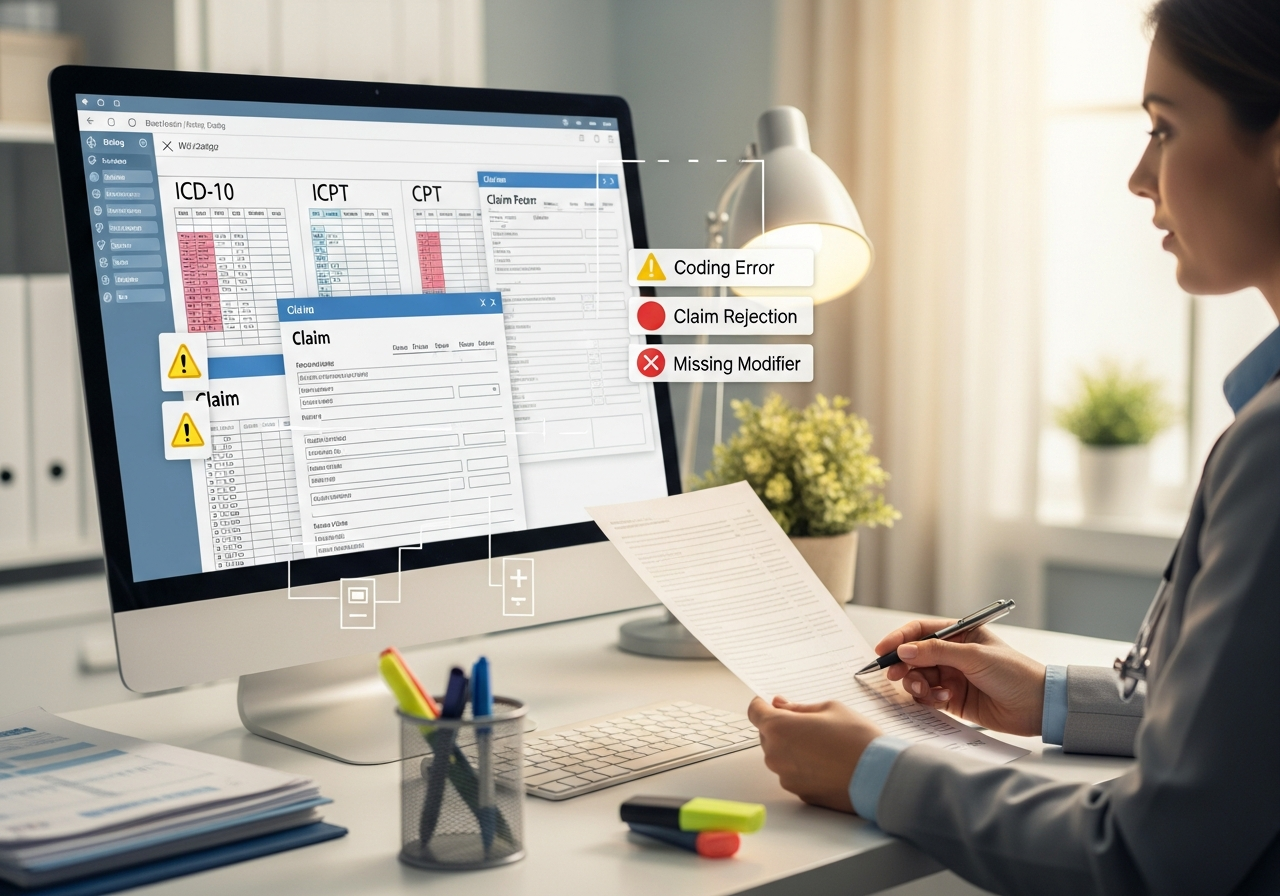
Coding is the backbone of medical billing. When the ICD-10 and CPT codes on a claim don’t match what the payer expects, the entire claim gets pushed back before it ever reaches full review. This is what many billers call an instant rejection —the claim doesn’t even make it to adjudication.
Most of these mistakes are preventable. They come from small oversights that slowly drain revenue and create unnecessary work for billing teams. Understanding these coding issues and fixing them early can save practices hours of rework and weeks of delayed payments.
1. Incorrect or Deleted Codes
One of the most common reasons claims get rejected is the use of invalid codes. ICD-10 and CPT updates happen every year, and codes are often revised, replaced, or deleted. When a biller submits an outdated code, the claim gets rejected immediately.
Examples include:
- Codes removed during the annual October ICD-10 update
- CPT codes replaced or bundled by new annual revisions
- Old diagnosis codes used for conditions that now require updated specificity
A simple way to prevent this is to check coding references regularly and use tools that update automatically. Even experienced coders fall into this trap when they rely on memory instead of updated materials.
2. Wrong Diagnosis Paired With the Procedure
This is one of the top reasons therapy and behavioral health claims are rejected. The diagnosis (ICD-10) must justify the service billed under the CPT code. If the two don’t connect in a clinically valid way, the payer will block the claim.
When working with ABA therapy billing services, this issue becomes even more important because ABA treatment depends heavily on diagnosis accuracy. A mismatch can stop the claim immediately.
3. Missing or Incorrect Modifiers
Modifiers explain the details behind a service—why it was done, how it was done, or who performed it. When the modifier is missing, incorrect, or placed in the wrong field, the payer treats it as an incomplete claim.
Common modifier problems include:
- Missing modifiers for telehealth
- Incorrect supervision modifiers
- Using modifiers that don’t apply to the specific payer
- Forgetting required modifiers for combined or reduced services
The same CPT code can mean two different things depending on the modifier, so payers consider it a serious error.
4. Lack of Coding Specificity
ICD-10 codes require precise details. A vague or unspecified code is one of the biggest triggers for rejections. Payers want to know:
- What condition the patient has
- How severe it is
- Whether it’s chronic or acute
- Which side of the body is affected
- Whether it’s the initial or follow-up visit
For example, using an unspecified anxiety code when a more detailed diagnosis exists increases the chance of rejection. Specificity matters—even if it takes more time.
5. Diagnosis That Doesn’t Support Medical Necessity
Payers want proof that the service billed was medically needed. If the diagnosis doesn’t support the intensity or frequency of the CPT code, the claim gets rejected almost instantly.
For example:
- Billing a high-level procedure for a mild diagnosis
- Using outdated or vague mental health codes
- Missing supporting documentation
This is a common issue even in ABA billing services, where medical necessity plays a major role in the approval process.
6. Incorrect Code Sequencing
The order of diagnosis codes matters. The primary diagnosis must reflect the main reason for the visit. When codes appear in the wrong sequence, the payer interprets the claim as incomplete or clinically inaccurate.
This often happens when:
- Codes are copied over without review
- The primary reason for treatment changes
- Secondary codes are placed first
A quick review of sequencing before submission prevents a majority of these issues.
7. Using Codes Not Covered by the Patient’s Plan
Every payer has its own rules. Some plans do not cover certain CPT codes, even if they are widely used. When a non-covered code is billed without checking coverage, rejection happens immediately.
Common examples:
- Billing codes not included in a Medicaid plan
- Using add-on codes without billing the primary code
- Attempting to bill CPT codes restricted by payer policy
This is why authorization and benefit checks before each visit are essential.
8. Missing Required Documentation Coding Links
Some services require additional details:
- Start and stop times
- Units
- Place of service
- Referring provider information
If those details don’t match the CPT or ICD-10 requirements, the clearinghouse rejects the claim. This is especially sensitive for high-value or time-based procedures where documentation must clearly support the code used.
FAQs
1. What is the number one reason for claim rejection due to coding?
The most common reason is using outdated or invalid ICD-10 and CPT codes. Any code that has been deleted or revised will stop a claim instantly.
2. How do I prevent coding-related claim rejections?
Use updated coding tools, double-check diagnosis and procedure links, ensure modifiers are correct, and verify payer rules before submitting the claim.
3. Are ABA therapy claims more likely to get rejected due to coding issues?
Yes, because ABA services rely on strict diagnosis-procedure alignment and medical necessity requirements. Small errors in coding often trigger immediate rejection.
Conclusion
Claim rejections caused by ICD-10 and CPT coding errors may seem small, but they have a major impact on cash flow, A/R days, and staff workload. When codes are outdated, mismatched, or unsupported, the claim never reaches the payer for full review. That means payment is delayed before the process even begins.
By checking code updates regularly, ensuring diagnosis accuracy, using the right modifiers, and reviewing payer rules, practices can dramatically reduce rejection rates. Coding accuracy isn’t just a technical requirement—it’s the key to clean claims, faster payments, and a smoother billing workflow.
 aliwriter
  MelodicChocolate5004
  industrytrends