
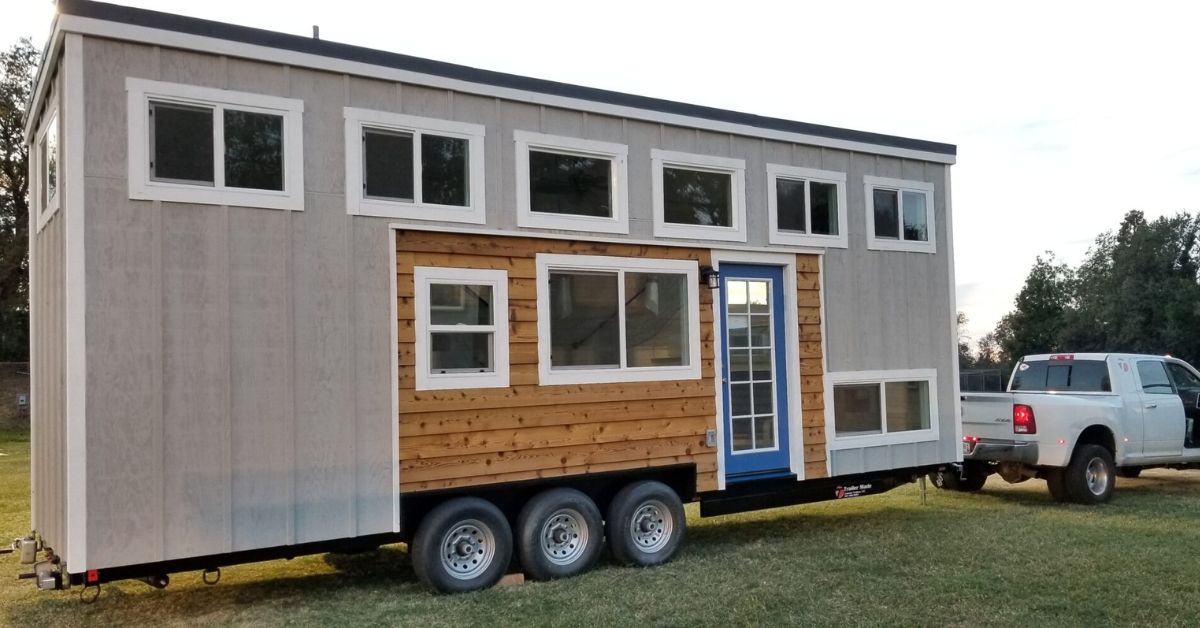
A lot of people who want a simpler, cheaper, and more ecological way of life have become interested in the tiny house movement. The most important choice that anyone who wants to live in a tiny house must make is what kind of foundation their home will be built on. Some people select permanent foundations, but a lot of others choose to build their small homes on wheeled trailers. This option isn’t just about looks; it’s a strategic choice based on mobility, legality, and practicality. For many tiny house builders, the first and most important step in building their home is to start with a trailer. This sets the foundation for a home that is both adaptable and useful.
What is the main reason people like trailer foundations?
The best reason to choose a trailer is that it lets you move around freely. A little house on wheels is basically a mobile asset. This ability to move about gives you more freedom than anything else. Owners can move their residences to get a new view, be closer to family, or follow career possibilities without having to go through the trouble of a normal real estate transaction. This ability to move around turns a home from a fixed place into a way to have fun. Also, people who don’t own land can rent space in a friend’s yard, a tiny home community, or an RV park with a mobile small house. This gives them a level of housing security that doesn’t depend on buying property.
How do trailer builds follow the rules for tiny houses?
Building rules and zoning laws can make the legal landscape for tiny houses hard to navigate. This is where the trailer comes in handy for getting over the severe rules that come with living in a compact residence. A building with a permanent foundation is considered a house in many places. It must follow strict residential building rules, which might be hard for a small, unusual home to do. But a house constructed on a trailer is sometimes called a travel trailer or a recreational vehicle. This change in classification can get beyond many of the usual building code rules, giving tiny house builders greater leeway to be innovative and structural. It is very important for owners to learn about the rules for small houses in their area, since the definitions and standards can be very different from one county to the next. However, the trailer-based model typically makes it easier to follow the law.
Is a Trailer a More Affordable and Accessible Option?
Many people choose to live in small spaces because they want to be free of debt. Building atop a trailer might help you reach this goal a lot. To begin with, the trailer itself is a big upfront cost, but it is generally cheaper than buying a piece of land and building a permanent foundation. This lets them spend more of their money on the quality of the home’s construction and the finishes within. Second, the whole process of building can be easier to get to. People who want to buy a home can build on a trailer in their driveway or a rented workshop space. This means they don’t have to pay for expensive site preparation and utility hookups while the home is being built. This DIY-friendly method lets people build their own miniature houses, which lowers labor expenses and gives them a strong sense of accomplishment.
Are There Structural Advantages to Building on a Trailer?
A heavy-duty trailer is a strong and purpose-built base for a tiny home, in addition to being legal and affordable. These trailers are built from the ground up to handle a moving load, which means they can handle the strains of being on the road. This natural strength gives a stationary home an extremely stable platform. The steel frame gives the wooden or metal subfloor a strong base to attach to, making the construction more stable and less likely to shift or settle than some tiny permanent foundations. For small house builders who care about structural integrity, a good trailer is a pre-made option that keeps the home safe and sound for years, whether it’s parked permanently or moved about from time to time.
What About the Challenges of a Mobile Foundation?
There are many benefits to choosing a trailer-based tiny house, but there are also some trade-offs. The most obvious problem is that the home has to fit within the trailer’s size limits, which usually means that both the square footage and the ceiling height are limited. Also, when building for road travel, you need to think carefully about how the weight is spread out and how the vehicle moves through the air. All parts, from the roof to the windows, must be chosen and put together so that they can handle the vibrations and wind pressures that happen during transit. Utilities are also a particular difficulty because they often need a mix of onboard systems, such as propane tanks, composting toilets, and RV-style hookups, which can be harder to set up than connecting to city services.
Conclusion
There are many reasons to build a tiny house on a trailer, including a desire for freedom, flexibility, and a practical approach to modern life. It is an option that gives people the power to take charge of their housing and offers a means to become a homeowner that avoids many common obstacles. The trailer is a smart way to get past complicated tiny house regulations, it has a strong structural basis, and it gives you the freedom to pack up and move your whole life without leaving your home behind. The trailer is not simply a foundation for a lot of tiny home fans; it is the very emblem of a life free from limits. It requires careful planning and a willingness to make some spatial and practical compromises.
 goddigital53
  akappliancerepair