
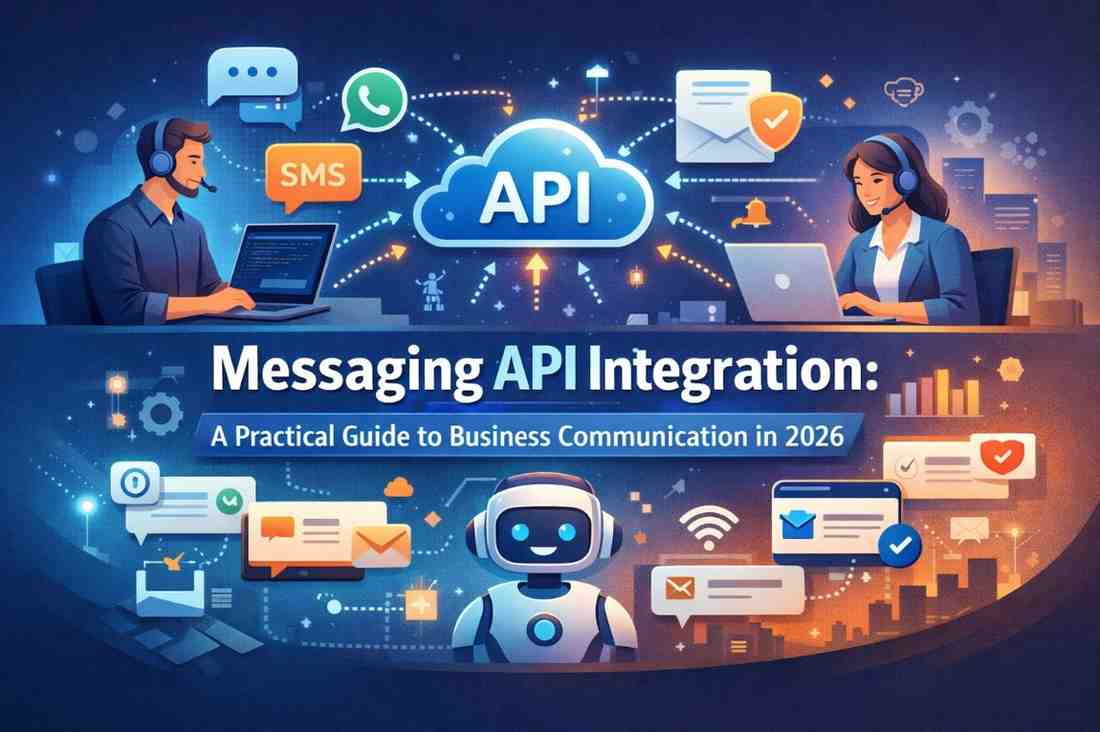
 Today’s customers expect quick, clear, and personal communication. Whether it’s a payment alert, order update, or support message, they want it instantly and on the channel they prefer.
That’s where messaging API integration comes in.
Messaging APIs help businesses automate conversations, respond faster, and stay connected with customers across channels like SMS, WhatsApp, RCS, email, and in-app messaging — all from one system.
This guide walks you through what messaging APIs are, why they matter, how businesses use them, and how to implement them effectively in 2026, without unnecessary complexity.
What Is a Messaging API (and Why Does It Matter)?
A Messaging API lets your applications send and receive messages automatically — without manual effort.
Instead of staff sending individual messages, your system handles communication in real time. This makes messaging:
-
Faster
-
More reliable
-
Easier to scale
-
Consistent across channels
In simple terms, messaging APIs turn communication into a smart, automated workflow instead of a manual task.
Why Businesses Use Messaging APIs
Businesses adopt messaging APIs because they help to:
-
Respond instantly to customers
-
Automate routine communication
-
Personalize messages at scale
-
Reduce operational workload
-
Communicate across multiple channels from one place
When done right, messaging APIs improve both customer experience and internal efficiency.
Key Benefits of Messaging API Integration
Instant Communication
Customers receive alerts, confirmations, and updates within seconds — exactly when they need them.
Easy Scalability
Whether you’re sending 100 messages or 10 million, messaging APIs are built to handle volume without delays.
One Platform, Multiple Channels
Send messages via SMS, WhatsApp, RCS, or email using a single integration instead of managing separate tools.
Personalized Messaging
Use names, order details, locations, or preferences to make automated messages feel genuinely human.
Lower Costs Through Automation
Automated messaging reduces manual errors, saves time, and cuts support costs.
How Different Industries Use Messaging APIs
Banking & Fintech
-
OTPs and authentication
-
Transaction alerts
-
Fraud warnings
-
Payment reminders
Healthcare
-
Appointment reminders
-
Prescription updates
-
Test result notifications
-
Patient follow-ups
E-commerce & Retail
-
Order confirmations
-
Delivery updates
-
Cart reminders
-
Personalized offers
Enterprises & Startups
-
Lead follow-ups
-
Customer onboarding
-
Internal alerts
-
Feedback collection
What to Look for in a Messaging API Provider
When choosing a messaging API, focus on these essentials:
-
Clear documentation and easy integration
-
Global delivery support and compliance
-
Strong security standards and data protection
-
Transparent pricing with usage visibility
-
High uptime and responsive technical support
-
Analytics dashboards to track performance
A reliable provider saves you time, money, and operational headaches.
How to Implement Messaging APIs (Step-by-Step)
1. Plan Your Communication
-
Decide what messages you’ll send
-
Choose the right channels
-
Define success metrics
2. Set Up the API
-
Select a provider
-
Get API credentials
-
Configure environments and webhooks
3. Build and Integrate
-
Create message templates
-
Add personalization logic
-
Handle errors and opt-outs properly
4. Test Everything
-
Test delivery speed and formatting
-
Validate numbers and regions
-
Monitor failures and retries
5. Launch and Improve
-
Start with a small rollout
-
Track results in real time
-
Optimize content and timing
Best Practices for Better Results
-
Keep messages clear and conversational
-
Personalize wherever possible
-
Avoid over-messaging
-
Always include a clear call to action
-
Respect user consent and preferences
-
Test and improve continuously
Good messaging feels helpful — not intrusive.
Advanced Messaging API Use Cases
-
AI-powered chatbots for support
-
Automated transactional alerts
-
Marketing drip campaigns
-
OTP and two-factor authentication
-
Surveys and feedback collection
-
Emergency and critical notifications
These use cases turn messaging into a business growth tool, not just a notification system.
What’s Next: Messaging API Trends in 2026
-
Rich messaging with images and buttons (RCS)
-
AI-driven personalization
-
Seamless omnichannel conversations
-
Voice and video messaging APIs
-
Predictive, behavior-based notifications
-
Stronger security and authentication methods
Messaging is evolving from simple texts to intelligent, interactive conversations.
How to Measure Messaging API Performance
Track metrics like:
-
Delivery and open rates
-
Click-through and response rates
-
Conversion rates
-
Opt-outs
-
Cost per message
-
Customer satisfaction
-
Overall ROI
What gets measured gets improved.
Common Challenges (and How to Handle Them)
-
Message length limits → Use rich channels
-
Global delivery issues → Choose strong carrier coverage
-
Spam risks → Follow opt-in rules strictly
-
Traffic spikes → Use rate limits and queues
-
Compliance changes → Stay updated with regulations
Most challenges are manageable with the right setup.
Why Businesses Prefer Professional Messaging API Providers
-
Ready-to-use global infrastructure
-
Proven delivery reliability
-
Built-in compliance and security
-
Easy scalability
-
Ongoing feature updates
-
Expert technical support
This allows businesses to focus on growth instead of infrastructure.
Final Thoughts
Messaging API integration is no longer optional. It’s a core part of modern business communication.
Companies that use messaging APIs effectively deliver faster responses, build trust, and create better customer experiences — all while saving time and cost.
As we move into 2026, messaging APIs will continue to power automation, engagement, and revenue growth for businesses of every size.
Quick FAQ (Voice Search Friendly)
What is a messaging API?
A tool that lets applications send and receive messages automatically across channels like SMS and WhatsApp.
Are messaging APIs secure?
Yes, trusted providers use encryption and compliance standards to protect data.
Can small businesses use messaging APIs?
Absolutely. They scale easily for small teams and large enterprises alike.
Which industries benefit most?
Banking, healthcare, e-commerce, logistics, SaaS, and enterprises.
 caballustrailers
  laser247id60
  prishu