
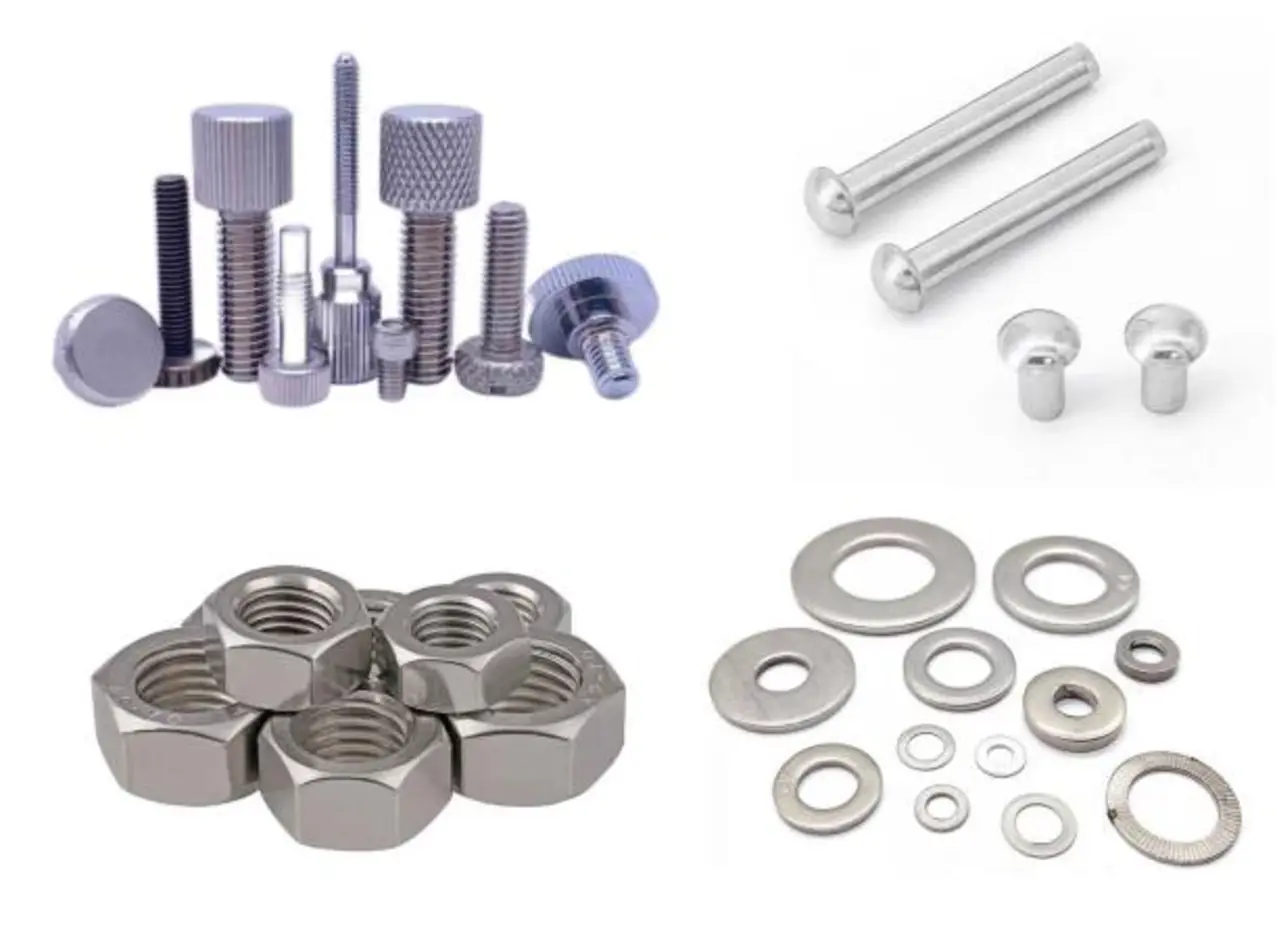
Aluminum fasteners have become a preferred choice across industries that need reliable connections without extra weight. From aerospace and automotive to marine, construction, and consumer products, the demand for lighter assemblies has pushed aluminum fastener innovation forward. Today’s manufacturers offer a wide range of options designed to deliver strength, corrosion resistance, and consistent performance in challenging environments. This guide explains the main types of aluminum fasteners, their advantages, and how to select the right solution for your application.
Why Choose Aluminum Fasteners
The advantages of aluminum fasteners start with weight. Aluminum has roughly one third the density of steel, which makes it ideal when every gram counts. A lighter product can improve fuel efficiency in vehicles and aircraft, reduce shipping costs, and make assembly handling easier in production lines.
Corrosion resistance is another key benefit. Aluminum naturally forms a thin oxide layer that protects against rust. In environments exposed to moisture, salt, and chemicals, aluminum fasteners provide longer service life with less maintenance. This is one reason they are seen so often in marine equipment, outdoor enclosures, architectural systems, and renewables.
Thermal and electrical conductivity add even more value. Aluminum helps manage heat in electrical and mechanical systems and supports static dissipation in electronics. The metal is also fully recyclable, which supports sustainability goals across global supply chains.
Common Types of Aluminum Fasteners
Manufacturers offer aluminum fasteners in a wide range of forms. The following categories represent the most widely used options.
Screws
Aluminum screws are available in machine screw, self tapping, self drilling, and socket head styles. They are common in electronics, panels, automotive trim, and consumer products that need a clean appearance and strong hold. Compared with steel screws, aluminum screws reduce weight and help prevent galvanic corrosion in assemblies that use aluminum components.
Bolts
Aluminum bolts provide dependable clamping force while keeping total mass low. Hex bolts, carriage bolts, and flange bolts are typical choices across mechanical assemblies, aircraft structures, and architectural systems. Manufacturers often offer bolts in different aluminum alloys to balance strength and corrosion resistance. These bolts are compatible with aluminum, magnesium, and composite parts where mixing metals could create corrosion risks.
Rivets
Rivets are one of the most widely used aluminum fasteners in high volume production. Blind rivets allow quick installation from one side of the workpiece, which is critical in tubing, enclosures, and structures with limited access. Solid and semi tubular rivets are preferred in aerospace and transportation because they create a long lasting mechanical joint with strong vibration resistance. Aluminum rivets are also favored in sheet metal fabrication because they match the thermal expansion of aluminum panels.
Nuts
Mur: Aluminum nuts pair with bolts and threaded rods to secure assemblies in automotive, marine, and industrial equipment. Hex nuts, lock nuts, and flange nuts are the most common versions. Because aluminum resists corrosion on its own, it does not require heavy coatings, which keeps production costs down. Aluminum nuts also help prevent galling in aluminum to aluminum connections.
Washers
Washers distribute load and protect surfaces from damage during tightening. Aluminum washers are used in aerospace panels, electronic housings, and automotive applications where surface protection matters. Flat washers, lock washers, and sealing washers with elastomer inserts are widely available. Their low mass and corrosion resistance make them a natural fit for weight sensitive assemblies.
Special Fasteners
Many manufacturers offer custom aluminum fasteners for specialized applications. These include standoffs, threaded inserts, captive screws, and precision turned components. Custom items allow engineers to match specific tolerances, finishes, and alloy properties. This is common in aerospace, electronics, and medical devices where design constraints require tailored solutions.
Choosing the Right Aluminum Fastener
Selecting the best Aluminum Fastener involves understanding performance requirements and application conditions. The following factors serve as a practical guide.
Alloy Selection
Different aluminum alloys offer different levels of strength, corrosion resistance, and machinability. For example, 6061 and 2024 alloys provide high strength for structural uses, while 5052 and 1100 alloys work well in environments with high corrosion exposure. Confirm that the alloy matches the demands of the assembly.
Mechanical Strength
If the joint must withstand heavy loads, vibration, or repeated motion, choose fasteners with higher tensile strength and proper thread design. Riveted assemblies and high strength bolt and nut combinations are common solutions for structural requirements.
Corrosion Environment
In saltwater or chemical environments, aluminum is often a smart choice. It protects itself and helps reduce galvanic reaction when paired with compatible materials. If the assembly uses dissimilar metals, consider surface treatments or isolating washers to prevent corrosion.
Thermal and Electrical Needs
For systems that require heat dissipation or electrical conductivity, aluminum fasteners can support overall system performance. Verify that the chosen fastener design and alloy match the required conductivity level.
Installation Method
Consider access, tools, and production speed. Blind rivets work well when access is limited. Self tapping screws reduce assembly time in thin sheet metal. Bolts and nuts offer the most serviceability for products that require regular maintenance.
Final Thoughts
Aluminum fasteners provide a powerful combination of light weight, corrosion resistance, and mechanical performance. With a wide selection of screws, bolts, rivets, nuts, washers, and custom components, manufacturers can meet the needs of industries around the world. By understanding alloy options, environmental demands, and installation requirements, engineers can select fasteners that deliver long term reliability and cost effective performance.
 webguruz
  mastersoftware
  Sulina1