
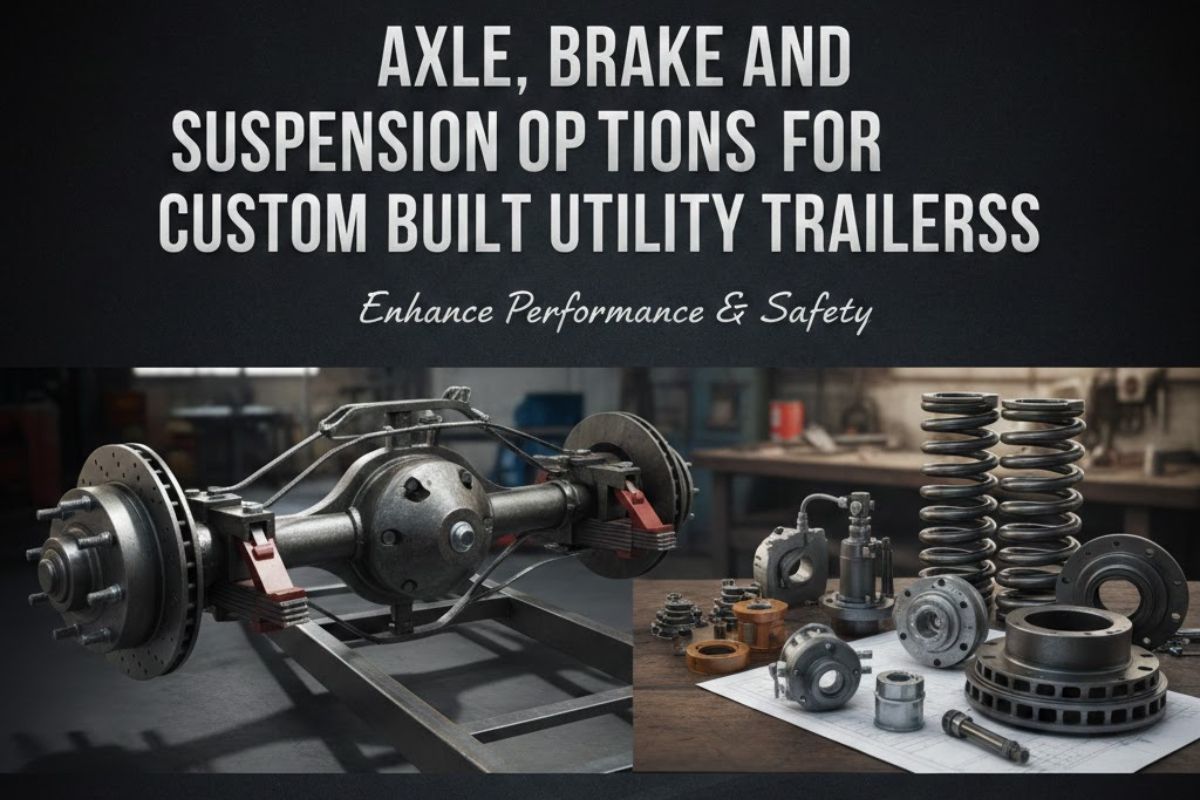
There’s a moment most trailer owners remember. You’re driving, maybe loaded heavier than planned, and you feel it. A bounce. A pull. A sound that shouldn’t be there. That’s usually when people realize the unseen parts matter more than the paint or side rails. Axles, brakes, suspension. The stuff under your feet, quietly doing all the work.
We’ve spent years around custom built utility trailers, right in the middle of design talks and late-night “should we go heavier?” debates. Somewhere between those chats, we’ve learned that choosing the right setup isn’t about chasing specs. It’s about how the trailer feels on the road. And yes, if you’re building or planning custom built utility trailers, these choices deserve more than a quick checkbox.
Axle Choices That Shape Everything
Axles decide how much weight you can carry, but also how calm the ride feels. Single axle trailers feel nimble. Easy turns. Easy parking. We like them for lighter loads, landscaping gear, small equipment. They forgive tight spaces.
Tandem axles bring stability. Two axles spread the weight, and that changes behavior instantly. Less sway. Better tracking at highway speeds. You feel it on long hauls, especially when crosswinds hit. Some owners hesitate because of cost or tire count. Fair. Still, once you tow loaded across uneven roads, tandem setups start making sense.
There’s also axle rating. 3,500 lb, 5,200 lb, 7,000 lb. Numbers look neat on paper. Real life isn’t neat. Loads shift. Materials add up. We often see people choose just enough. Sometimes that’s okay. Sometimes it leads to sagging springs six months later. A little buffer feels boring until it saves you.
Drop axles versus straight axles? Drop axles lower the deck height. Easier loading. Lower center of gravity. Straight axles ride higher, better ground clearance on rough sites. Neither is wrong. It depends on where the trailer lives.
Brake Systems People Forget Until They Don’t
Brakes are funny. Nobody talks about them until a close call. Electric brakes remain the common pick for utility trailers in many regions. They tie into the tow vehicle, respond predictably, and parts stay accessible. Most drivers get used to the controller feel quickly.
Electric-over-hydraulic systems feel smoother under heavier loads. Less grabby. More progressive. They cost more, sure, yet the difference shows on downhill stretches. Anyone who’s smelled hot brakes knows that calm stopping matters.
Surge brakes appear on boat trailers a lot. They work without electronics, using momentum to activate braking. Simple idea. Works well near water. Some folks love the independence. Others dislike the lack of fine control.
Local rules matter here. Some states and regions require brakes after certain weight limits. Others inspect brake performance closely. We’ve sat through inspections where brake wiring alone delayed approvals. Not fun.
Suspension Isn’t Just Comfort
Suspension gets overlooked. That’s a mistake. Leaf springs remain common. Affordable. Familiar. Easy to service. They handle abuse fairly well, especially on job sites. The ride can feel stiff when empty. That’s normal.
Torsion axles offer a smoother feel. Each wheel moves independently. Less bounce. Less rattling. If you carry fragile cargo or tow often on highways, torsion setups feel calmer. Downside? Repairs cost more, and field fixes aren’t simple.
Some builders mix heavier leaf packs with shock absorbers. It sounds extra, yet it helps. Shocks calm rebound. Your trailer stops pogo-sticking after bumps. That alone reduces wear on tires and welds.
We’ve watched trailers without proper suspension chew through tires fast. Uneven wear. Cupping. It tells a story you don’t want.
Matching Setup to Actual Use
This part gets personal. A contractor hauling skid steers needs a different setup than someone moving ATVs on weekends. Same trailer shape. Different lives.
Think about load frequency. Daily hauling beats occasional use. Road conditions matter too. Smooth highways feel forgiving. Rural backroads punish weak setups quietly.
We’ve seen owners regret underbuilding more than overbuilding. Rarely the other way around.
Location Plays a Role Too
Climate changes everything. Hot regions push brake systems harder. Dusty areas chew through moving parts. Coastal zones invite corrosion. In places like the UAE or southern US, heat management matters. In colder zones, sealed components survive longer.
Local sourcing helps. Parts that shops recognize get fixed faster. Waiting weeks for specialty components kills downtime tolerance.
Little Details That Add Up
Hub size. Grease type. Bearing access. These sound boring until a roadside repair teaches humility. EZ-lube hubs save time. Grease fittings placed poorly save nothing.
Wheel size affects ride too. Larger wheels roll smoother over rough surfaces. Smaller wheels feel twitchy at speed. It’s subtle, yet noticeable.
We’ve stood roadside changing bearings in heat we wouldn’t recommend. That memory shapes decisions now.
Talking With Builders Honestly
Good builders ask questions. How heavy? How often? Where? Bad ones sell whatever’s in stock. We prefer conversations that include pauses and “hmm” moments. That’s usually a good sign.
A custom trailer shouldn’t feel guessed. It should feel considered, even if imperfect.
Living With the Choices
After delivery, the trailer teaches you. You feel every bump, every stop. Some setups fade into the background. That’s success. Others remind you constantly. That’s feedback.
Trailers don’t need to feel fancy. They need to feel predictable.
And when they do, hauling stops feeling stressful. It just feels like work getting done.
Also Read: Food Trailer Manufacturing
 hightechsaini
  AlexWillson