
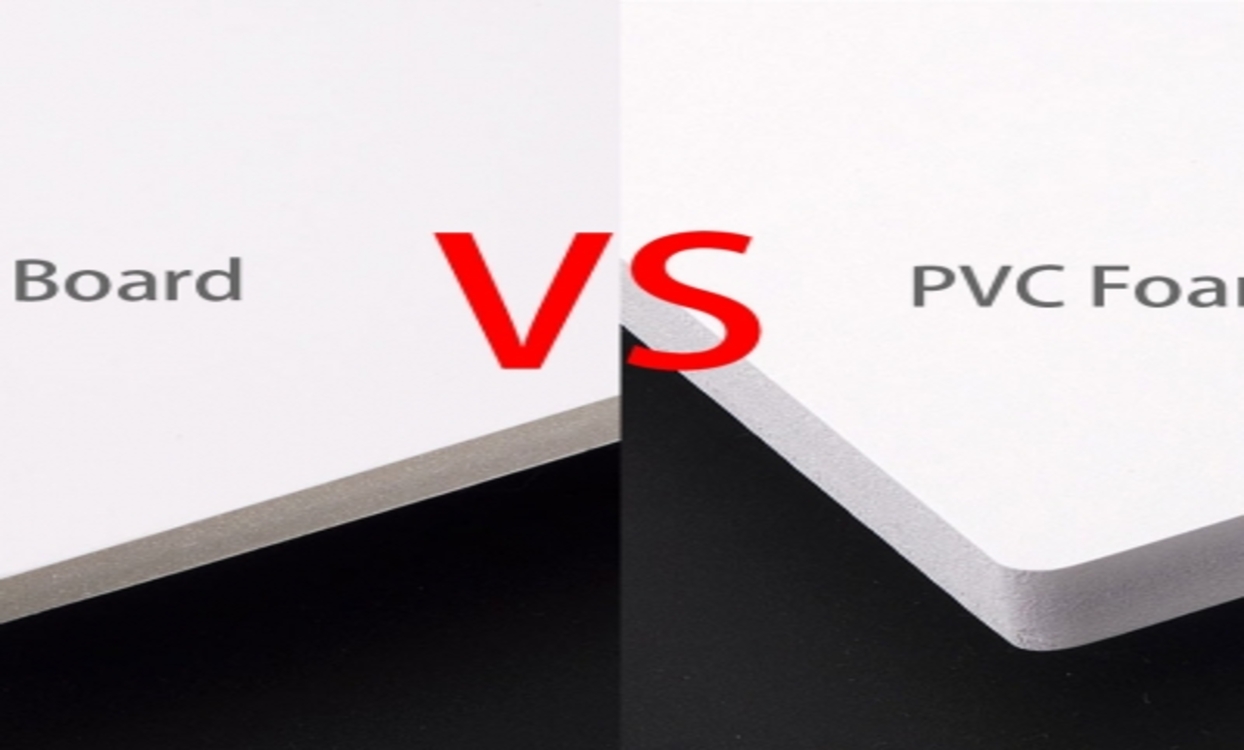
When comparing PVC Boards vs PVC Foam Boards, many buyers assume the two materials perform the same way. They share the same base material, offer strong resistance to moisture, and are widely used across construction, furniture manufacturing, signage, and interior applications. But the differences between them affect performance, cost, and the final result of any project. Understanding these distinctions helps professionals choose the right product with confidence.
What Are PVC Boards?
PVC boards are rigid, solid sheets made from polyvinyl chloride. They are dense, stable, and built to handle demanding environments. Their structure provides consistent strength across the entire surface, which is why they are often selected for applications that need durability and dimensional stability.
Key Characteristics
High density: Solid construction with no internal air pockets.
Strong load resistance: Ideal for surfaces that must support weight or mechanical stress.
Smooth, uniform finish: Works well for machining, routing, or detailed cutting.
Excellent weather and chemical resistance: Suitable for outdoor or industrial settings.
PVC boards maintain their shape, even under heat or pressure. This makes them a dependable replacement for wood in many industries where moisture and decay are concerns.
- Typical Applications
- Architectural elements
- Exterior cladding
- High-strength furniture components
- Machinery guards
- Industrial panels
These boards are chosen where strength and longevity matter more than overall weight.
What Are PVC Foam Boards?
PVC foam boards, sometimes called expanded PVC boards, are manufactured by introducing a foaming agent into the material during production. This creates a lightweight core filled with micro-bubbles. The result is a board that is firm but lighter and easier to handle than solid PVC.
Key Characteristics
Lightweight structure: Much easier to transport, cut, or install.
Good surface printability: Excellent for digital printing, lamination, or UV printing.
Sufficient strength for general use: While not as dense as solid PVC, they still perform well in many structural and decorative applications.
Cost effective: Lower density means less material usage, which often reduces cost.
PVC foam boards offer a balance of strength, weight, and versatility, making them a popular choice for signage and interior design.
- Typical Applications
- Advertising displays
- Exhibition panels
- Interior partitions
- Lightweight furniture
- Decorative wall panels
For projects where handling, weight, and finish flexibility matter, PVC foam boards often outperform solid PVC.
PVC Boards vs PVC Foam Boards: Five Core Differences
To choose the right material, focus on how these two products differ in real-world performance.
1. Density and Weight
The most obvious difference is density. Solid PVC boards are heavier and more compact. Foam boards are lighter because of their internal cellular structure. This impacts load capacity, handling, and installation.
If the project requires portability or reduced structural load, foam boards are the better fit. If high strength is essential, solid PVC wins.
2. Strength and Durability
Solid PVC boards provide superior strength. They resist bending, impact, and surface pressure. Foam boards perform well for moderate use but will not match the mechanical strength of solid PVC in heavy-duty environments.
For long-term installations, high-traffic areas, or structural builds, solid PVC is the safer choice.
3. Surface Quality
Both materials offer smooth surfaces, but foam boards typically provide better print adhesion. Their surface is more suited for vinyl lamination and direct printing. Solid PVC offers excellent machining quality, which makes it ideal for detailed fabrication or carved designs.
Think of it this way:
For printing or signage: Foam board
For machining or structural shaping: Solid PVC
4. Cost Efficiency
In general, PVC foam boards cost less due to their lower material density. Solid PVC boards come at a higher price point but deliver superior durability.
For budget-sensitive projects that still require clean finishing, foam boards are an efficient choice. For high-end or long-term applications, investing in solid PVC pays off through extended service life.
5. Application Suitability
Choosing the right product depends on the application. In many projects, both options could work, but one will deliver a more reliable or cost-effective outcome.
- Outdoor structures: Solid PVC
- Indoor decorative elements: Foam board
- Load-bearing furniture: Solid PVC
- Signage and branding: Foam board
High moisture environments: Both perform well, but solid PVC offers longer durability
How to Decide Which Material You Need
With PVC Boards vs PVC Foam Boards, professionals should focus on three main factors:
- Strength requirements
- Weight limitations
- Budget and production scale
If your team needs to cut, route, or engineer a product that must withstand stress, solid PVC offers security and precision. If the project centers on visual presentation, branding, or lightweight interior fit-outs, foam boards provide versatility with cost savings.
Final Thoughts
PVC boards and PVC foam boards share many advantages, including moisture resistance, stability, and ease of fabrication. Their differences lie in density, strength, and application suitability. Understanding these distinctions ensures that every project uses the ideal material for performance, longevity, and cost efficiency.
By choosing the right option, manufacturers, builders, and designers can optimize their results and deliver higher quality outcomes across global industries.
 webguruz
  mastersoftware
  Sulina1