
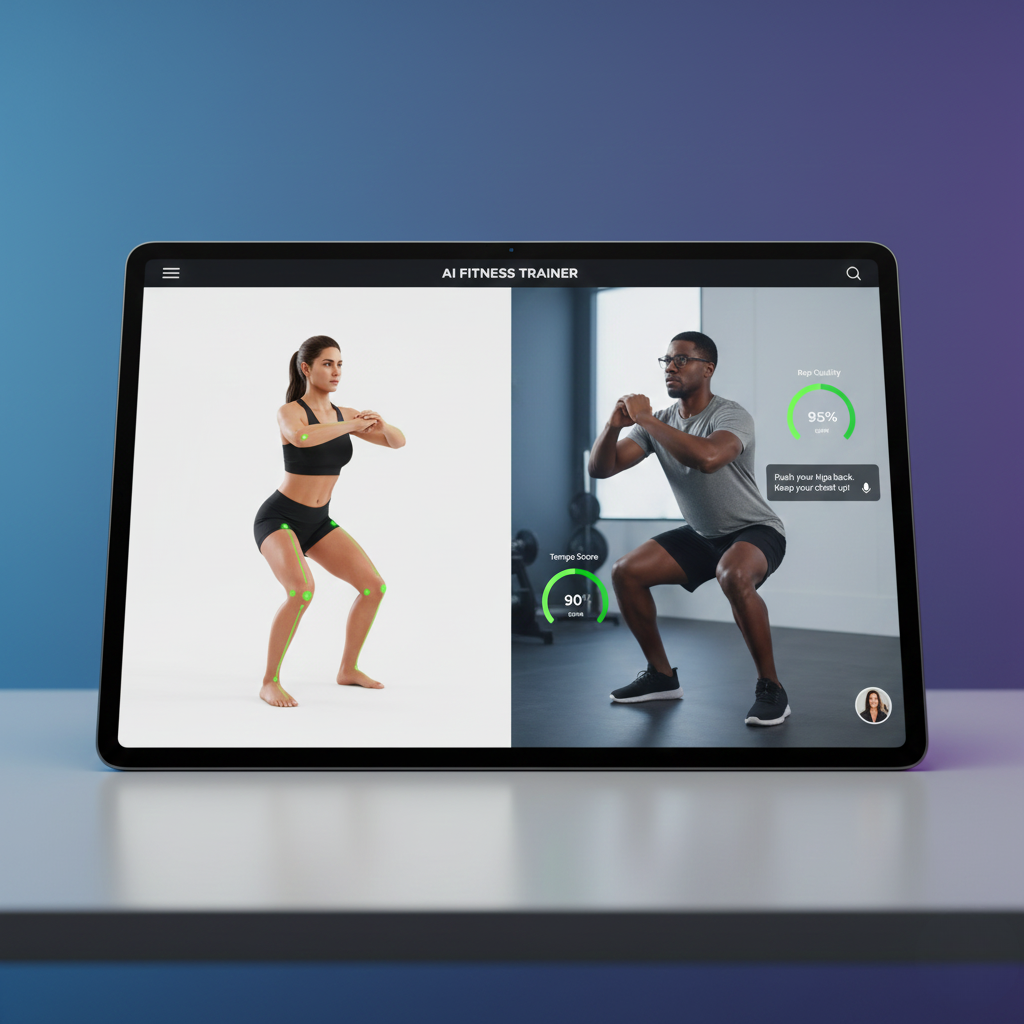
The fitness industry is no longer just about iron and sweat; it is about data, algorithms, and personalization. By 2026, the global digital fitness market is projected to exceed $120 billion, according to industry analysts at Grand View Research. At the forefront of this revolution is the AI Trainer a digital coach capable of analysing biometric data, correcting form via computer vision, and predicting plateaus before they happen.
If you are a coach or an entrepreneur looking to launch an AI-driven platform, your online presence is your most valuable asset. To succeed, you need more than a digital brochure; you need a high-performance engine. Here is an in-depth guide on how to work with a fitness website design to create a site that dominates the 2026 market.
The Shift to Hyper Personalization
In the past, fitness websites were one-to-many. You posted a video, and thousands watched it. In 2026, the market has shifted to one-to-one. Research from organizations like McKinsey indicates that 71% of consumers now expect companies to deliver personalized interactions, and that number is even higher in the health sector.
When considering your fitness website design, personalization shouldn’t just be a feature it should be the foundation. Your website needs to act as a living organism that adjusts its interface based on the user’s current mood, energy levels, and previous workout performance.
Technical Pillars: What Your Fitness Website Developer Needs to Know
Building an AI-integrated site is significantly more complex than building a standard blog. Your fitness website developer must be proficient in API integrations and machine learning frameworks. Here are the core technical pillars for 2026:
Seamless Wearable Integration (The IoT Mesh)
By 2026, it is estimated that over 1.2 billion people will be wearing smart devices. Your website must be a central hub that pulls data from:
- Biometric Sensors: Heart rate variability (HRV), blood oxygen, and glucose monitors.
- Smart Apparel: E-textiles that track muscle activation (EMG data).
- Home Gym Hardware: Integrating with smart dumbbells and cable machines.
Computer Vision and Real-Time Feedback
One of the most exciting trends in fitness website design is the use of the camera as a tool for Pose Estimation. Using frameworks like Tensor Flow, your website can analyse a user’s squat depth or spinal alignment through their laptop or phone camera. This provides the eyes for your AI trainer, allowing it to give audio cues like keep your chest up in real-time.
Low-Latency Edge Computing
In 2026, speed is everything. If your AI trainer takes five seconds to process a movement, the user has already finished the set. Your developer needs to implement edge computing processing data closer to the user to ensure that the interaction feels instantaneous and fluid.
Design Principles for 2026: The Invisible Interface
The best fitness website design is one that stays out of the way. When a user is mid-workout, they don’t want to click through complex menus with sweaty hands.
Voice and Gesture Control
Voice-first navigation is the standard for 2026. Users should be able to say, “Hey Coach, I’m feeling a bit tired today”, let’s go easier, and have the website automatically adjust the intensity of the session. Incorporating Natural Language Processing (NLP) allows your AI trainer to understand and respond naturally.
Predictive Dashboards
Instead of just showing what a user did, your dashboard should show what they will do. Using predictive analytics, your site can display a Progress Forecast. For example: “Based on your last three sessions, you are on track to hit your bench press goal in 14 days.” This gamification is a massive driver for retention.
Data Security: The New Currency of Trust
As an AI trainer, your website will handle some of the most sensitive data imaginable heart rates, sleep patterns, and even video of people in their homes. According to recent cybersecurity reports, 82% of fitness app users cite data privacy as their top concern when choosing a platform.
Your fitness website developer must prioritize:
- End-to-End Encryption: Ensuring that biometric data is scrambled and unreadable to hackers.
- Blockchain Data Ownership: Giving users the ability to own their fitness data.
- Regulatory Compliance: Meeting the strict requirements of GDPR, CCPA, and health-specific laws like HIPAA.
Content Strategy for an AI-Driven World
In 2026, you shouldn’t just be filming 30-minute workout videos. Instead, you should be creating Modular Content Blocks. These are short, high-quality clips of exercises that your AI can stitch together on the fly to create a custom workout. If the AI determines a user needs more core work, it pulls from your core video library and inserts it into the session seamlessly.
Frequently Asked Questions (FAQs)
What makes an AI fitness website different from a regular fitness site?
A regular site provides static content (videos/articles), whereas an AI fitness site uses real-time data to adapt. It uses sensors, cameras, and user history to change the workout while the user is doing it.
Do I need a specialized fitness website developer for this?
Yes. A standard developer may not have experience with Computer Vision (using cameras to track movement) or integrating with wearables like the Apple Watch. You need someone who understands Bio-data processing.
How much does it cost to build an AI trainer website in 2026?
Because of the advanced AI integration, costs can range from $15,000 to $50,000+ depending on the complexity of the machine learning models and the number of devices it needs to sync with.
Is my data safe on an AI fitness platform?
Modern fitness website design in 2026 uses advanced encryption and often stores data on a decentralized blockchain to ensure that your health information remains private and under your control.
Can AI replace a human personal trainer?
AI is great for tracking, form correction, and data analysis. However, human trainers provide emotional support and complex motivation. The best platforms in 2026 use a Hybrid Model combining both.
Conclusion
Building a professional fitness website for an AI trainer in 2026 is no small feat. It requires a blend of cutting-edge technology, intuitive design, and a deep understanding of human psychology. By focusing on wearable integration, real-time feedback, and iron-clad security, you position yourself at the top of a crowded market.
 SokolPaul76
  intouchgroup
  thelogoboutique