
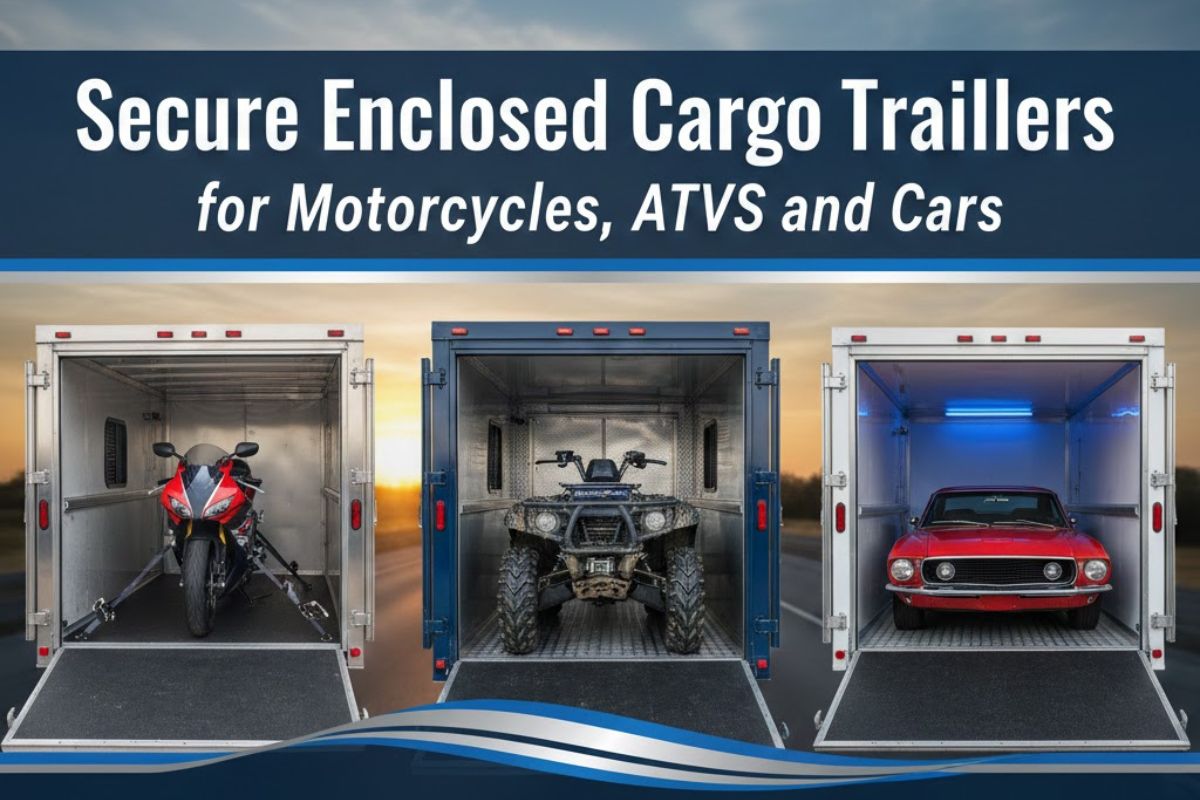
There’s a certain feeling when you shut the trailer door, lock it, and walk away. A mix of relief and quiet confidence. Maybe it’s your motorcycle inside, still warm from the last ride. Or an ATV with mud on the tires that you didn’t bother washing yet. Or a car you’ve spent way too many weekends working on. Somewhere in the middle of all that sits the idea of enclosed cargo trailers, not as a sales pitch, but as a practical answer to a pretty simple worry: how do you move valuable machines without stressing the whole drive?
I’ve towed open trailers before. Plenty of times. Wind, rain, curious eyes at fuel stops. It gets old fast.
Why Enclosed Trailers Feel Different on the Road
An enclosed trailer changes the tone of the trip. Less anxiety. Less checking mirrors every ten seconds. The bike isn’t getting blasted by road grime. The ATV isn’t baking under the sun. The car stays out of sight, which honestly matters more than people admit.
Noise drops too. That rattling, clanking soundtrack from open setups? Mostly gone. You hear tires, engine, your own thoughts. Long drives feel shorter. Or maybe just calmer.
Real Protection, Not Just a Shell
Weather is the obvious thing. Rain sneaks in everywhere. Dust finds cracks you didn’t know existed. An enclosed cargo trailer blocks most of that mess. Metal walls. Solid roof. Tight seams. After a stormy drive, opening the trailer and seeing everything dry feels like a small win.
Security sneaks up as the bigger deal. Lockable doors. Hidden cargo. Parking overnight stops being a gamble. People can’t steal what they can’t see. Simple logic, but effective.
Motorcycles: More Than Just Tie-Downs
Motorcycles shift. Anyone who’s hauled one knows that tiny movements add up. Wheel chocks inside enclosed trailers help settle the bike. E-track systems let straps sit where they actually need to be, not wherever the trailer decided to drill holes.
You smell the fuel sometimes. Rubber too. It lingers. Ventilation matters more than brochures suggest. Roof vents, side vents, even small windows help keep that closed-in smell from turning sour.
ATVs and Side-by-Sides Fit Better Than Expected
ATVs look bulky. They are. But enclosed trailers built with wider interiors and ramp doors make loading easier than it sounds. You drive in. Shut the door. Done.
Mud stays inside the trailer, not sprayed across the highway. That alone sells a lot of riders. Tie-down points placed low keep the machine planted, even on uneven back roads where suspension works overtime.
Cars Need Space and Patience
Car hauling takes planning. Interior height. Door clearance. Weight balance. It’s not a rush job. Once loaded, though, the trailer becomes a moving garage. Paint stays clean. Panels avoid stone chips. Curious onlookers never know what’s inside.
Car enthusiasts tend to notice insulation too. Less temperature swing inside means fewer worries about materials expanding or contracting during long hauls.
Small Details That End Up Mattering
Interior lighting sounds boring until you load at night. LED strips change everything. Plywood-lined walls take abuse without denting metal. Rubber flooring grips boots and tires better than bare steel.
Then there’s the ramp door angle. Too steep and it’s awkward. Too shallow and it drags. The good ones feel natural. You notice right away.
Regional Use Plays a Role
In warmer states, ventilation gets more attention. Heat builds fast inside metal boxes. In colder areas, sealed edges and insulated roofs keep frost from creeping in. Coastal regions think about corrosion. Rural areas think about gravel roads and vibration.
Across the USA, enclosed cargo trailers show up at racetracks, trailheads, farm lanes, and suburban driveways. Same tool. Different needs. It adapts quietly.
Storage Beyond Transport
An unexpected bonus? Storage. Trailers end up parked at home, acting as mobile sheds. Helmets. Tools. Spare tires. Camping gear. It all lives there. Out of sight. Out of the way.
Some owners admit the trailer becomes more valuable than what it carries. That says something.
Towing Experience Over Long Miles
Weight adds up. A well-balanced enclosed trailer tracks straight. Crosswinds still push, sure, but not in that heart-jumping way. Brakes matter. So does axle rating. You feel it on descents. Smooth deceleration builds trust fast.
Fuel stops feel less tense too. No exposed cargo. No lingering glances. You step inside for coffee and don’t rush back out.
Choosing One Without Overthinking It
People get stuck comparing specs. Wall thickness. Door height. Axle count. All valid. Yet real-world use settles most questions. Think about what you haul most days, not once a year.
A rider hauling one bike doesn’t need the same setup as someone moving cars weekly. Buying slightly bigger than current needs avoids regret. That thought shows up sooner than expected.
Living With It Obver Time
Trailers age. Scratches happen. Tires wear. Hinges squeak. A solid enclosed cargo trailer keeps doing its job without demanding attention. That quiet reliability builds attachment. Weird, maybe. True anyway.
There’s a moment after unloading, standing inside the empty trailer, smelling rubber and dust, hearing the echo of your own steps. It feels ready. Waiting. Like it knows it’ll be used again soon.
Also Read: Custom Built Utility Trailers
 kmkventures
  divyanshi
  TheMauldinGroup