

The architectural landscape of 2026 has officially moved past the era of the vast, echoing open-plan box. While the desire for light and communal flow remains, there is a growing realization that “boundless” living often leads to a lack of intimacy and, more critically, thermal inefficiency. We are entering the age of broken-plan living—a design philosophy that uses visual and physical cues to define separate functional areas without the need for traditional walls. Central to this movement is the strategic use of verticality. By drawing the eye upward and utilizing the often-ignored height of a room, homeowners are discovering that they can carve out distinct environments within a single large floor plate. This shift isn’t just about aesthetics; it is about the physics of the “thermal pocket,” where heat is harnessed to define a space as much as any rug or partition might.
The Vertical Frontier: Reclaiming Floor Space for Functional Clarity
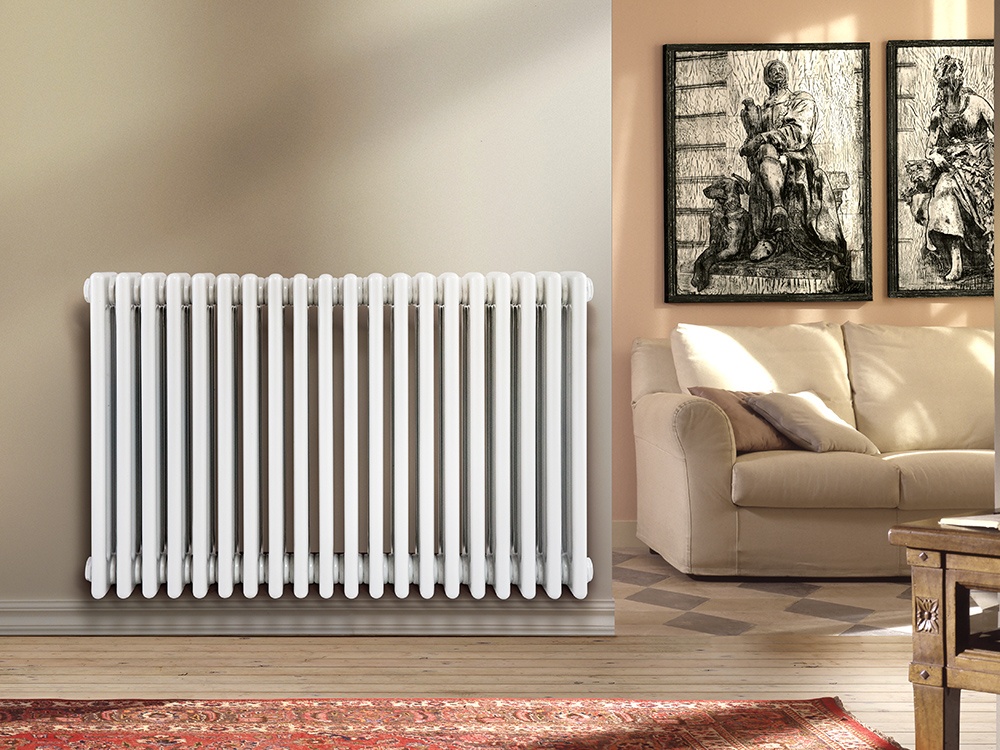
In an open-plan environment, every square foot is a precious commodity. Traditional horizontal heaters are often the enemies of fluidity; they dictate furniture placement and frequently end up blocked by sofas or dining tables, which effectively stifles their output. The transition to a column radiator in a vertical format changes the entire geometry of a room. By stretching the heating element toward the ceiling, you occupy a slender footprint that allows for a more creative furniture layout. These vertical units act as architectural pillars that signify a change in the room’s purpose. For example, a tall, charcoal-finished unit placed at the transition point between a kitchen and a living area acts as a silent gatekeeper, providing a physical and thermal boundary that helps the brain distinguish between the high-energy “work” zone of the kitchen and the “soft” relaxation zone of the lounge.
Thermal Layering: The Science of the Comfort Microclimate
One of the greatest challenges of open-plan living is the “cold draft” phenomenon. Large spaces often suffer from air currents that move heat away from where people are actually sitting. Zonal living in 2026 solves this through the concept of thermal layering. Instead of trying to heat the entire cubic volume of air in a 40-square-meter room to 21°C, designers are placing high-output vertical columns in specific “activity hubs.”
By concentrating radiant heat sources near the dining table or the reading nook, you create a microclimate. Because vertical columns have a significant surface area, they project heat horizontally across the seating plane. This means that while the peripheral hallways or transition zones of the house might be a crisp 17°C, the “living zone” feels incredibly cozy. This targeted approach is the cornerstone of 2026 energy management. It acknowledges that we don’t live in every corner of our homes simultaneously, so our heating shouldn’t behave as if we do.
Mastering the Visual Rhythm of Broken-Plan Design
Design in 2026 is heavily influenced by “Rhythmic Minimalism.” This style relies on repeating patterns and structural lines to create a sense of order. The vertical tubes of a column unit provide a perfect rhythmic element. When you align these units with other vertical features—such as floor-to-ceiling cabinetry, tall indoor plants, or even the mullions of a window—you reinforce the structural integrity of the home.
In a broken-plan layout, you might use a pair of identical vertical units to “frame” an entryway or a transition. This creates a visual portal. The eye recognizes the symmetry, and the body feels the sudden increase in radiant warmth, signaling that you have moved from one zone to another. It is a multisensory experience that makes a home feel organized and intentional. Using a bold color for these units, such as a deep bronze or a matte navy, further emphasizes their role as “anchor points” in a sea of open space.
Acoustic Softening and Heat Distribution
An overlooked benefit of the column design in large spaces is its impact on acoustics. Open-plan homes often suffer from harsh echoes due to hard surfaces like polished concrete or hardwood floors. While a radiator isn’t a dedicated acoustic panel, the deep, irregular surface of a multi-column unit helps to break up sound waves rather than reflecting them back like a flat, steel panel would.
When it comes to heat distribution, the verticality is an asset to air circulation. As the air at the base of the radiator is heated, it rises rapidly through the columns, creating a gentle “thermal chimney” effect. This encourages a slow, natural rotation of air within that specific zone. This movement is enough to keep the air feeling fresh and the temperature uniform from head to toe, without creating the aggressive, dusty drafts often associated with forced-air systems or old-fashioned convector heaters.
The Smart Zone: Integrating Technology with Verticality
Future-proofing an open-plan home requires a sophisticated control layer. In 2026, this means that each vertical “heat zone” is managed independently via smart thermostatic valves. In the past, one thermostat would control the entire ground floor, leading to a kitchen that was too hot while the far corner of the living room stayed chilly.
Modern zonal living allows you to treat each vertical column as its own entity. You can schedule the kitchen column to reach temperature for the breakfast rush, then power it down while the home-office zone takes over for the rest of the day. Because vertical units are so efficient at projecting heat, they can bring a specific zone up to temperature much faster than underfloor heating, which often takes hours to respond. This “on-demand” zonal heating is the key to balancing the luxury of large-scale living with the ethical necessity of energy conservation.
Selecting the Right Profile for Open-Plan Impact
Not all vertical columns are created equal. When styling for 2026, the depth of the unit—how many columns deep it is—becomes a critical design decision. A slim, two-column vertical unit is ideal for narrow transition spaces or hallways, providing a sleek, unobtrusive profile. However, in a large, double-height living room, a chunky four-column unit is required to provide the visual weight and the BTU output necessary to command the space.
2026 Styling Cheat Sheet
-
The Minimalist Monolith: Match the radiator color exactly to the wall color to create a textured, sculptural effect that feels like part of the wall.
-
The Industrial Accent: Use a clear-lacquered raw steel unit against a white or brick wall to define a “studio” or “maker” zone within the home.
-
The Heritage Pop: Use a classic, deep-blue vertical column in a modern kitchen to bridge the gap between contemporary cabinetry and traditional comfort.
Installation Logistics in Large Spaces
When moving to vertical units in an open-plan renovation, the plumbing often needs to be re-routed. Since vertical units are taller, the pipework usually enters from the bottom, which is a departure from the side-entry pipes of old horizontal panels. This is actually an advantage in 2026 design, as it allows for “central valve” configurations. These valves sit closely together in the middle of the unit’s base, resulting in a much cleaner, more symmetrical look that mimics a piece of high-end furniture rather than a utility item.
Furthermore, because these units are tall and heavy, ensuring they are mounted to structural elements is vital. In many modern open-plan extensions, this means planning the “heat zone” during the framing stage, ensuring that extra timber noggins are placed behind the plasterboard to support the weight of the water-filled columns. This level of planning is what separates a standard renovation from a high-end, future-proofed home.
Conclusion: The New Definition of Domestic Flow
The shift toward zonal living represents a maturing of our relationship with open spaces. We have learned that “more room” does not always mean “better living.” By utilizing vertical column radiators as both thermal anchors and visual dividers, we are able to reclaim the intimacy and efficiency of the traditional home while maintaining the light and air of the modern open-plan dream.
In 2026, the most successful homes are those that understand the rhythm of their inhabitants. They are homes that can be expansive when the whole family is present and cozy when only one person is working from home. These “heat zones” provide the flexibility to adapt our environments in real-time. As you plan your next renovation, look up. The walls you think you need might just be replaced by the warm, vertical pillars of a well-placed radiator—a solution that is as much about the art of living as it is about the science of heating.
 harry876
  john121