
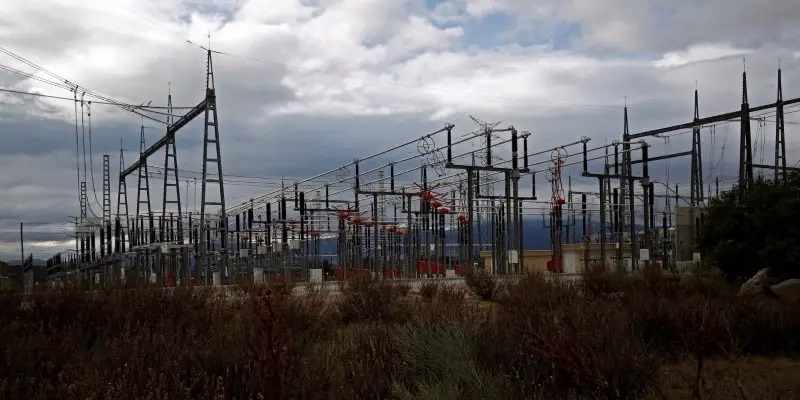
How Digital Integration Increases the Risk of Power Outages
Modern electrical grids are no longer isolated physical systems. They are connected to digital platforms, cloud dashboards, remote operations centers, and thousands of distributed sensors. While this connectivity improves efficiency, it also opens the door to cyber threats capable of disabling entire regions. According to the International Energy Agency (IEA), cyberattacks targeting energy infrastructure have grown by over 60% in the past three years, making the electricity sector one of the most vulnerable components of national critical infrastructure.
This article breaks down the exact cyber threats that have the potential to cause widespread power outages, along with real-world examples, attack methods, and protective strategies used by leading security experts.
Understanding Cyber Threats to Power Infrastructure
Today’s power networks face a combination of outdated systems and expanding digital exposure. Key risk factors include:
- Legacy equipment: Many grid components were built decades ago, long before cybersecurity was a design requirement. When connected online, they become easy targets.
- Operational Technology (OT) convergence: SCADA and industrial control systems are now frequently linked with IT networks, allowing attackers to enter through the corporate side and reach critical operations.
- IoT expansion: Smart meters, sensors, and connected field devices add convenience but dramatically enlarge the attack surface.
- Poor segmentation: In some utilities, weak separation between IT and OT environments allows intruders to move laterally once they gain initial access.
These factors collectively create a landscape where even minor weaknesses can turn into severe system-wide risks.
Major Cyber Threats That Can Cause Electrical Power Outages
1. Malware Attacks
Malware remains the most destructive threat to power utilities. Some malware strains were specifically engineered to compromise power infrastructure, making them extremely dangerous.
Notorious Grid-Targeting Malware
- Stuxnet, although aimed at nuclear systems, highlighted how malware can manipulate industrial controllers.
- Black Energy; Used in the 2015 Ukraine blackout, allowing attackers to take control of operator systems.
- Indu Stroyer/Crash Override: Capable of directly manipulating power grid switches and relays.
- Havex: Spread via infected industrial software installers.
Malware can infect systems through phishing, infected USB drives, compromised vendor access, or supply chain infiltration.
2. Ransomware Attacks
Ransomware attacks on energy companies increased by over 200% since 2020, as reported by the U.S. Cybersecurity & Infrastructure Security Agency (CISA).
Utility companies are prime targets because:
- Their operations cannot pause.
- Billing systems, control rooms, and operations networks are interconnected.
- Shutdowns create immediate economic and public impact.
While ransomware usually encrypts data, it can indirectly cause outages if:
- Operators lose access to SCADA dashboards
- Dispatch centers are locked out of critical systems
- Backup systems fail or are corrupted
High-profile ransomware groups have repeatedly attempted to infiltrate U.S. and European power utility operations.
3. Distributed Denial of Service (DDoS) Attacks
DDoS attacks overload network bandwidth and make systems unavailable. Power grids rely on communication pathways between substations, and when these communication channels become clogged, operators lose visibility and control.
A major DDoS attack can:
- Disrupt coordination between grid controllers
- Shut down remote terminal units (RTUs)
- Delay critical alarms
- Interrupt emergency response actions
Even if DDoS attacks don’t directly shut down electricity, they significantly increase the likelihood of failures during peak load events.
4. Supply Chain Attacks
Power utilities depend on thousands of vendors, software providers, hardware manufacturers, third-party maintenance teams, and cloud platforms. Attackers often target these vendors because they are easier to infiltrate.
A supply chain breach can:
- Install backdoors inside critical grid systems
- Compromise firmware in industrial devices
- Spread malware through legitimate updates
Incidents like the SolarWinds attack demonstrated how a single compromised vendor update could affect thousands of organizations at once, including government agencies and energy companies.
5. Insider Threats
Insider threats are among the hardest risks to detect. They include:
- Disgruntled employees
- Contractors with excessive privileges
- Accidental mistakes by untrained staff
Since insiders already have legitimate access, they can unintentionally or deliberately:
- Misconfigure critical systems
- Disable protection mechanisms
- Grant unauthorized remote access
- Introduce malware through removable media
Utilities report that insider-related issues account for 20–25% of OT security incidents annually.
6. Phishing & Social Engineering
Social engineering remains the easiest way for attackers to breach utility networks. Employees with access to SCADA or remote monitoring tools are frequently targeted through:
- Spear-phishing
- Business email compromise
- Impersonation of vendors
- Fake update notifications
Attackers use stolen credentials to log into remote systems, escalate privileges, and ultimately access OT environments. Phishing is believed to have contributed to over 60% of initial intrusions in the energy sector last year.
7. Zero-Day Exploits
Zero-day vulnerabilities are undiscovered software flaws. Because no patch exists, attackers can exploit them to gain silent access to power grid systems.
Zero-day exploits are highly dangerous because:
- Utilities often run outdated operating systems
- Industrial devices have long patch cycles
- Attackers maintain persistent access for months
Nation-state actors frequently invest in zero-day capabilities to compromise critical infrastructure as part of a geopolitical strategy.
Real-World Cyberattacks That Caused Power Outages
- Ukraine 2015 Blackout; Black Energy; The first confirmed cyberattack-induced blackout in history. Attackers remotely opened breakers at multiple substations, cutting power to over 230,000 residents.
- Ukraine 2016 Crash Override Attack: A more advanced malware framework directly targeted grid protocols. It remains one of the most sophisticated OT attacks ever observed.
- S. Energy Sector Intrusions; While no major outage occurred, the Department of Homeland Security confirmed that U.S. utilities have been breached multiple times. These intrusions demonstrated that attackers were mapping infrastructure for potential future disruption.
How These Attacks Spread Inside Power Networks
Cyberattacks follow a predictable pattern:
- Reconnaissance; Mapping network devices and OT/IT connections
- Initial Compromise: Phishing, malware, credential theft
- Lateral Movement: Jumping between network segments
- Privilege Escalation: Gaining administrative access
- Manipulation of ICS/SCADA; Issuing harmful commands
Due to interconnected digital controls, a single infected workstation can compromise an entire region’s electrical stability.
Impact of Cyberattacks on Electrical Infrastructure
Cyberattacks on power infrastructure can trigger a wide range of consequences that extend far beyond the grid itself.
One of the immediate impacts is operational disruption, where operators lose real-time visibility into transformer loads, voltage conditions, line frequency, and circuit performance, making it nearly impossible to maintain stable grid operations. These attacks can also cause direct equipment damage, especially when protective relays are manipulated. Overloaded transformers and misconfigured breakers can lead to catastrophic failures, resulting in repairs that cost utilities millions of dollars.
The financial implications are equally severe. Even a single hour of power loss can cost industrial facilities more than $100,000 in production delays, scrap materials, and halted operations. Beyond economics, public safety risks escalate rapidly during outages, affecting hospitals, emergency response networks, traffic management systems, and even water treatment facilities that rely on a continuous electricity supply.
On a broader scale, large-scale disruption of electrical infrastructure poses national security threats, as adversaries may use coordinated cyberattacks to destabilize critical services, disrupt economies, or interfere with military readiness.
Prevention and Protection Measures for Power Utilities
As a cybersecurity consultant, in my work with critical energy systems, I’ve found that strengthening power-grid security starts with layered defenses. Utilities must isolate IT and OT networks, deploy industrial firewalls, monitor SCADA endpoints continuously, and enforce MFA with consistent patching and firmware updates. Applying Zero Trust principles and running regular backup and disaster-recovery drills also reduces operational risk.
I routinely perform penetration testing and OT risk assessments to help utilities identify vulnerabilities before attackers exploit them. A data security consultant can further support secure backups, remote access protection, and incident-response readiness. Together, these measures provide strong and cost-efficient protection for modern critical infrastructure.
Securing Power Grids Against Evolving Cyber Threats
Cyber threats capable of causing electrical power outages are evolving rapidly, and the stakes have never been higher. From malware and ransomware to insider threats and zero-day vulnerabilities, attackers have developed sophisticated methods to manipulate power grid operations. As digital transformation accelerates, utilities must prioritize OT security, continuous monitoring, incident response readiness, and strategic partnerships with expert consultants.
Organizations that work with a seasoned cybersecurity consultant USA as Dr Ondrej Krehel, gain the advantage of proactive defense, a crucial requirement for protecting communities, businesses, and national infrastructure from catastrophic blackouts.
Read More: Should Startups Use Offshore CPA Services to Manage Their Finances?
FAQs Section:
1. What types of cyberattacks can disrupt power grids?
Malware, ransomware, DDoS attacks, supply chain breaches, insider threats, phishing, and zero-day exploits can all compromise electrical infrastructure.
2. How do cyberattacks affect power infrastructure?
They can cause operational disruptions, equipment damage, financial losses, public safety risks, and even national security threats.
3. Why are modern power grids particularly vulnerable?
Integration with IT networks, IoT devices, legacy systems, and weak network segmentation increases exposure to cyber threats.
4. What measures can utilities take to prevent outages?
Layered defenses, network segmentation, continuous monitoring, MFA, patching, Zero Trust principles, backups, and disaster-recovery drills are essential.
5. How can cybersecurity consultants help protect electrical grids?
Experts assess vulnerabilities, implement secure architectures, conduct penetration testing, and design incident response and backup strategies to mitigate risks.
 minibushire
  techbazaar11